15 BIG ONES!
The life of Brian Wilson's Beach Boys in songs

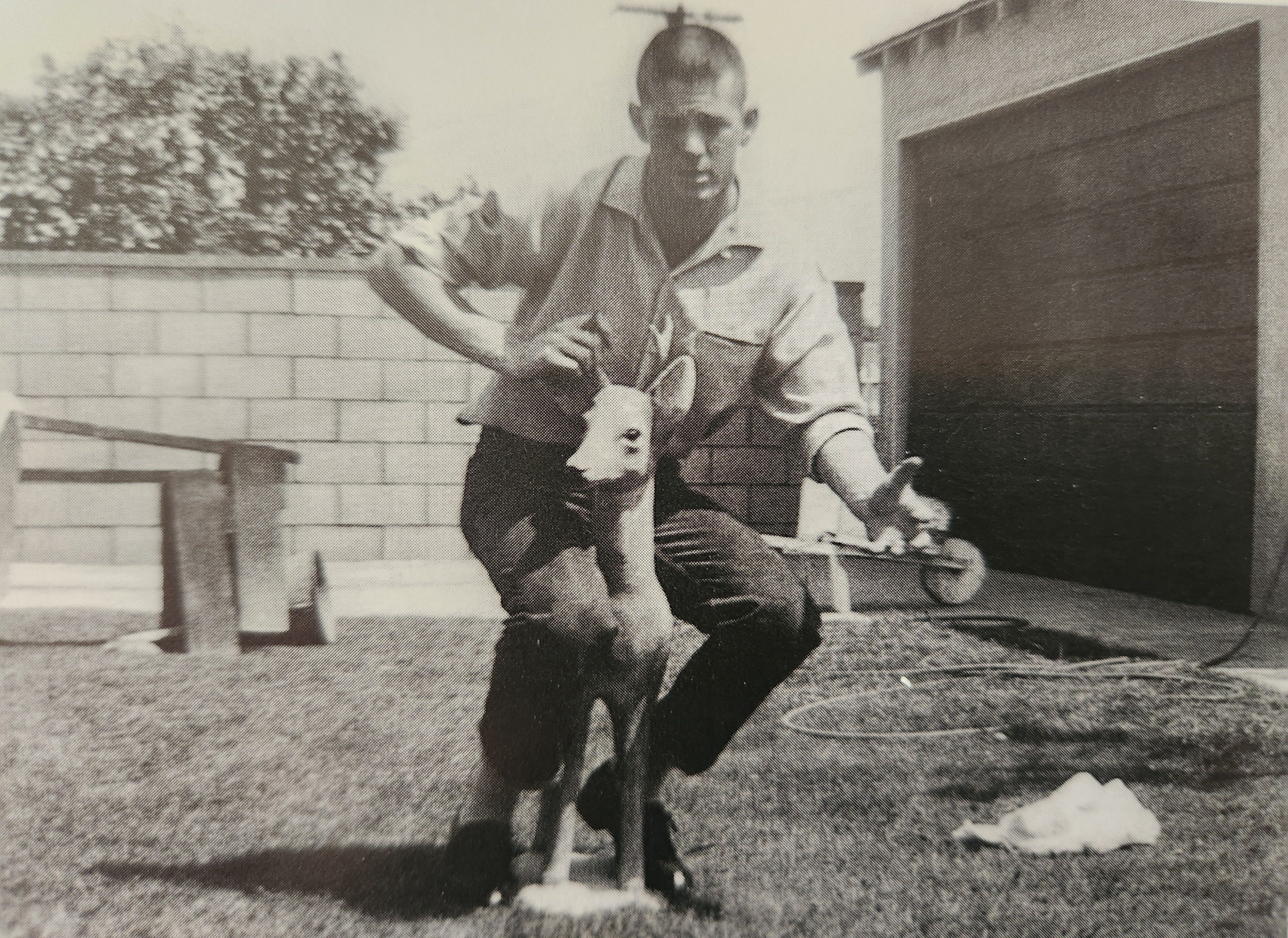
On June 11th, it became official: after many years, a young man was gone at last. Brian Wilson, the Adult Child of rock ‘n roll, long since graduated to senior babydom, had finally passed away, leaving only everything behind that had made him a hero of my own adult childhood. When I started listening to his music, in late 1984, his unique path through life was at a definitively low ebb. Had it subsequently followed the arc of Wilson’s fellow young-man-gone, Sly Stone, no one would have been surprised, but instead, he was somehow brought back to the world - in some form or another - to be present (whether or not he wanted to be there) to ultimately see his reputation reformed, and records that had been deemed unsuccessful in their day reconsidered as important creative works. And this opened his heart and allowed him to make one final Beach Boys record after decades away from what had become “the brand.” Corny? Yeah - but me, I remain touched.
So, Brian Wilson, who made some of the most remarkable music in the frankly, now very-distant rock and roll era, is dead. It’s the end of the end of the end of an era, at the very least. What better for a superfan to do than boil it down to a list of greatest songs, right? In June, there sure were a bunch of those. Now that it’s been some months - here’s another! This time, if you want the hits and highlights…sure, there are some, but I’m inclined to use my sweet fifteen to trace the progress of this man’s weird character and artistry as I’ve known and loved it. Given that he wrote almost 200 songs for The Beach Boys alone (no solo songs included here), fifteen seems potentially reductive, but don’t worry - I have taken the liberty of mentioning lots of significant others too. You can take taking anything mentioned here as a potential Big One.
For me, this is, with any luck, a final exorcist: back in the late 80s, my friends and I printed a zine that included a bunch of teenage ravings about this stuff. Those musings can only be considered unfinished in the light of me and everyone else’s subsequent decades of discovery and listening since then. F’rinstance, Smile back then comprised a possibly apocryphal story of tragic failure to evolve, represented by a limited quantity of bootlegged pieces, as opposed to the real-life, whole hog, profusely annotated five disc box that came out in 2011 and sold like yer ol’ hot cakes and you can still hear today! Thank godness that there ain’t but the one way and that it involves good old full circles. So, this is goodbye, and I mean it this time (though it’s more likely farewell and we’ll meet again, as we always have). SO!
1 In My Room
Brian Wilson was a teenage introvert damned to need make it in an adult extrovert’s world. Even in The Beach Boys’ earliest days, his undiagnosed issues bred social anxiety, obsessive-compulsive behavior, depression, etc. All these traits, however challenging they were or eventually became, were major contributors to his unique musical abilities. From the start, the songs that got the Beach Boys airplay benefited from an outsider perspective, their conceptual and programmatic structure built upon observed, as opposed to shared, behavior. Based largely on a suggestion from younger brother Dennis that songs about youth trends would be more likely to get radio airplay than other types of songsm their first single “Surfin,” got them spun in their local LA area; the second single, “Surfin’ Safari” b/w “409,” added a second demographic group (car enthusiasts), and climbed into the top 20 nationwide. Even though Brian Wilson had no proclivity for surfing and found it “scary,” and felt no extraordinary passion about cars, this became the formula, as agreed upon by the production team of Nik Venet (their Capitol A&R Man), Murry Wilson (their dad), singer Mike Love and himself. This formula was precisely replicated for “Surfin’ USA” b/w “Shut Down,” which made The Beach Boys national stars in the spring of 1963, and further established their extroverted front. Deep cuts from their debut album, Surfin Safari, were a mix of near-miss youth-trend stuff, like “Chug-a-Lug,” (about root beer parties with your buddies) and “The Shift,” (an ode to a really fine dress for beach girls) alongside a pathos-laden strain of romantic misadventures, in which the singer knows only hapless frustration and failed connection with the fairer sex. This pathos was the true stuff of the introvert, and it was a direction Brian Wilson was inclined to pursue, but the overwhelming success of “Surfin’ USA” led to a demand for ACTUAL surfin’ music filler for the next album, leaving him only one spot to explore his lonely longings. “Lana” hit them on the head in a hot minute and a half, a lovelorn plea for said girl to accompany the singer “so far away” to “another world” where just the two could love, unhindered. This was, again, the language of the introvert; similar lyrical imagery would adorn his greatest work later in the decade. “Lana” danced upon a sprightly tempo, but Wilson’s inner nature demanded that such expressions be wedded to a harmonically-rich ballad style. Thus, the next single followed the formula – surf on the A side, cars on the B – with a couple twists. The A, “Surfer Girl,” was a ballad, not a fast song, not focused on surf culture, but on feelings of desire for a girl (a SURFER girl!). Had this single not sold, it might have changed the course of things – but people loved it, and with “Little Deuce Coupe” groovin’ at a satisfying midtempo on the flipside, it was another top 10 hit. Which brings us – at last! – to “In My Room.” This was the B-side of their subsequent single, once more stretching the formula’s remit: the A-side, “Be True to Your School” was a fast song focused on youth culture in general, and “In My Room” was a ballad that eschewed all thoughts of surfing, cars or girls, to focus on the singer’s private space in which he accesses his internal world of thoughts, feelings, dreams, beliefs, and insecurities. Arranged, like “Surfer Girl,” in lustrous five-part harmonies, and reveling in its sanctity of its introverted reality, this is the true entry point to Wilson as a personal songwriter, a profound step in the evolution of his “teenage symphony.”
2 Be True to Your School
On the other side of “In My Room” was the formula-required extrovert track, and the first of their A-sides that did not mention surfing. This was significant: at the time “Be True to Your School” was released (right around homecoming weekend of October 1963), Wilson and the Beach Boys had just about two years’ experience making records. They were six months past the titanic production upgrade of “Surfin’ USA” and its subsequent game-changing success. Brian Wilson himself was still a year or so away from a recognition of the album as a communication vehicle – for now, he was prepared to put everything he had into one song to get another hit for The Beach Boys. Everything, that is, except writing another song about surfing! For him, the challenge of scoring on the back of that fad had faded. More importantly, surfing was not relevant to his inner life and his anxieties about making it in the outer world, soooo… the formula was tweaked, swapping the milieu of surfing out for the social world of high school, a common experience for almost every potential listener. Beyond this adjustment, “Be True to Your School” embodies the extrovert/fast song side of The Beach Boys with lyric and pace alike, covering all the bases in just over two minutes. There was however, an additional production upgrade, one was drawn from the nature of the subject at hand: where previous songs were about enthusiastic individuals enjoying themselves set against the backdrop of their niche community, “Be True to Your School” is a song about a communal feeling shared by individuals during their all-important passage through adolescence, and its number of small, but important manifestations in their social lives. With the production, Wilson, just three years past his own graduation day, aimed to further enhance the audience’s experience of this commonality with the most extensive arrangement he’d yet endeavored on a Beach Boys record, adding horns, marching band drums and a squad of cheerleaders to the sounds of the band and their harmonies. This conception of the song-as-event was an essential lesson that Wilson had recently gleaned from Phil Spector’s production of The Ronettes “Be My Baby.” He employed it for himself here, with full cinematic sweep, seeking to transport the listener by every means possible. The song appeared in two separate versions: an initial, more straightforward album cut, quickly followed by a more fully-fleshed remake that produced the big hit record. Wilson’s growing awareness of the depth of flavor that could be achieved through a combination of writing and production was a consideration that would be held in increasingly high importance for not just singles, but album tracks as well, reaching a pinnacle three years later with the studio-as-instrument construction of “Good Vibrations,” six months after the album-length immersive experience of Pet Sounds.
3 I Get Around
The successive smash hits “Surfin USA,” “Surfer Girl,” and “Be True to Your School,” alongside the sales of three albums showcasing those songs, made The Beach Boys the hottest act in America by the end of 1963. Flush with their success, they spent the first ten days of January 1964 recording new tunes, coming out of those sessions with their next single, “Fun Fun Fun.” At that very moment, the release of The Beatles “I Want to Hold Your Hand,” was creating a fast-building sensation around the US, and their February appearance on The Ed Sullivan Show officially launched Beatlemania in America. This didn’t affect The Beach Boys’ popularity, per se - “Fun Fun Fun” was released that month and rose to #5 on the singles charts - but it certainly shook their sense of themselves as the progenitors of a “new thing.” Meanwhile, after a disciplined run of double-sided excellence on their previous four hits, the B-side of “Fun Fun Fun” indicated a certain slacking of focus. “Why Do Fools Fall in Love,” didn’t fit the formula on any level - it was a fast number, rather than an oppositional ballad, about neither cars nor surf, and further, it was a cover of a golden oldie – and a rather benign cover, at that. It’s possible that Wilson was temporarily exhausted after The Beach Boys’ breakout year, in which he was required to produce nearly three albums of material to support their three big hit singles, and then tour and promote the records THEN roll up in January of ‘64 with another batch. He did all that, and “Fun Fun Fun” was a successful single, but once he’d had a couple additional months to answer to the impacts of “I Wanna Hold Your Hand,” he came up with something new in his conception, and it hit big. “I Get Around” garnered the Beach Boys their first US #1 single. To get it there, Wilson went all out – the song was their fastest single to date, but it was also their slickest composition, with dead stops and rhythmic variations accenting the dynamics of verse and chorus, tautly arranged with saxophones, organ and percussion accenting the band’s surging performance. No detail was too small, and they all came together like gears in a gleaming, brand new, top-quality engine. Significantly, while making this record, Brian fired his father from the production team, a rebellious act whose headstrong energy can be felt in the song’s charge. This was not a resolution of anything per se – not issues with The Beatles or his oppressive father, etc – instead, the emotions driving the song would become increasingly important for him compositionally. At this juncture, it was merely a sign of changing values. One that lyrically, Wilson and Love’s opening line keyed upon:
I’m getting bugged driving up and down the same old strip
I gotta find a new place where the kids are hip
But for the further couple verses and stanza in “I Get Around” concerning the singers’ unquestionably superior social standing in town, this is a quintessence of proto-Pet Sounds thought. That said, it was power, not thought, that mattered most in the spring of 1964, and this was self-affirmation at its most powerful. The Beach Boys had previously had some success outside the US – a #1 single with “Surfin’ Safari” in Sweden, go figure! – but it took the restive declamation of “I Get Around” to break them through internationally, including, significantly, the territory of Great Britain. How better to strike back at the Beatles? Released just over a year after “Surfin’ USA,” “I Get Around” served notice that not only were the Beach Boys NOT going away, but they were branching out and getting better with every record.
4 Don’t Worry Baby
The B-side of “I Get Around” suggests how complicated the simple directive of the Beach Boys singles formula was becoming with each release. Building upon the formula-twist of “Surfer Girl”/ “Little Deuce Coupe”, in which ‘slow’ and ‘fast’ could used as well as ‘surf’ and ‘cars’, “Be True to Your School”/ “In My Room” introduced a further set of subcategories that get to the true heart of the matter as we’ve observed it thus far: ‘extrovert/introvert’. Using introvert material on a single, a format clearly designed for popular success, indicates the increasing importance placed on representing that lonely, misfit part. On any level you want, “I Get Around”/ “Don’t Worry Baby,” kicks the evolving formula around magnificently – a slow and a fast side, both sides referencing cars and social standing AND an extrovert A with introvert B. All boxes checked! Plus, “I Get Around” reset the bar for high achievement to date. The flipside’s introvert expression, “Don’t Worry Baby,” was another classic, the opening verse encapsulating Wilson’s internal angst (and the cure!) with sensitivity and grace:
Well, it’s been building up inside of me
For, oh, I don’t know how long
I don’t know why, but I keep thinking
Something’s bound to go wrong
But she looks in my eyes
And makes me realize
When she says
Don’t worry baby
When the social/car part of things appears in the second verse (the singer has bragged about how fast his car is and now he has to race, and it freaks him out), it goes straight back to “In My Room”: the world as an anxious place and the singer isn’t safe without a place to go where he can be his real self. “Don’t Worry Baby” winningly finds that place in the affirmative embrace of a girl. The song’s arrangement is straightforward compared to the intensive orchestration of “I Get Around.” Here, guitars, bass, piano and drums chug along without much individual articulation; even when the guitar steps out to solo, it’s a slow-moving rhythm break of just two notes. It’s the brevity of this performance itself that lands deep, a stalwart and soulful heartbeat that drives the song’s message. The key is the drumbeat – a forthright variant on Spector’s signature “Be My Baby,” intro, playing out in all aspects of the instrumental arrangement: saying more with less, using simple stuff like reverb to up the ante, then letting the vocals bring everything into focus. That the wordless voices of the intro do this all on their own is a testament to the power reserves of “Don’t Worry Baby” – its emotional payload is delivered in full during the opening 15 seconds of the song, before a single word has been uttered. The verses, chorus and solo simply amplify and elevate that ecstatic feeling over the next two and a half minutes, making this one of The Beach Boys’ most incandescent achievements – at times, more like a feeling that comes over the listener than a song they’re hearing. Also significant is the curious makeup of the feeling itself – if this is ecstasy, why does it feel so melancholy? This was one of Wilson’s signatures in full early bloom.
5 When I Grow Up (To Be a Man)
Three months after “I Get Around”/ “Don’t Worry Baby,” the next Beach Boys single appeared, both it’s sides once again reveling in departure. This one signaled a permanent breakdown in the formula because of an undernoticed aspect of Wilson’s character. While most often paired with Paul McCartney in the rival Beatles’ camp, Brian Wilson’s songwriting evolution more closely matches John Lennon’s. Both he and Lennon had started their record-making career determined to make popular songs; once they’d done so, the credulity of that intention became strained, to be replaced with a new goal – the honest expression in song of emotional, spiritual, and intellectual states drawn from their own lives. Lennon’s inclination to make personal statements over the next two years produced “Nowhere Man,” “In My Life,” “The Word,” “Rain,” “I’m Only Sleeping,” “She Said, She Said,” and most radically, “Tomorrow Never Knows” and “Strawberry Fields Forever.” While these are encompassing rock ‘n roll recordings, they did not operate in a strict sense as ‘commerical’ records (and significantly, in choosing this path, Lennon essentially ceded the A-side of Beatles singles to McCartney for the remainder of their run). In this same period, Wilson similarly pushed the intentions behind his music – and the music itself - forward so swiftly, that there were soon concerns at the label and within the band itself that the prioritizing of commercial appeal was becoming secondary to the more abstract goal of communicating a feeling. In August 1964, however, using this approach to produce an expression of the anxiety and melancholy felt while facing adult life’s ambiguities still made “When I Grow Up (To Be a Man)” a top 10 record. The theme of ‘how will we feel when we’re older,’ was as true an appeal to everyday people as “Be True to Your School”; the personal depths of this sentiment would be more comprehensively explored on Pet Sounds. Still, coming after their initial turbo-charged youth anthems, “When I Grow Up (To Be a Man)” sure hits different. The lachrymose shades of “Don’t Worry Baby” were now shining out from the music even at its brighter tempos, and Wilson’s concerns over the pathos of things, ie, shortcomings and letdowns, were telescoped here into the repeated refrain at song’s end:
Won’t last forever, oh no
It’s kinda sad
Further, placing the couplet in the mouths of Mike Love (for the first line) and Wilson (for the second) while the remainder of the band counts out the ages of the 20s upwards into years of unmistakable adulthood over a musical backdrop featuring a craftily cycling drum pattern and harpsichord accompaniment is another indication of Wilson’s rapidly evolving arrangement ambitions. Ornate productions in which the more sensitive emotions held center stage would soon become the standard, rather than the departure in Brian Wilson’s music, regardless of whether or not they was the stuff of bigger hits. At its best, it would be both, but a compulsion to descend to purple depths was already creating chaos in his process, and it would soon combine with other ticking timebombs to derail his career in spectacular fashion within a couple years’ time.
At that time, and in the years following, Wilson’s change in direction was regarded largely as a loss of impetus and inspiration and ultimately, a tragedy. Sixty years later, it is much easier to see that the greater tragedy would have been Brian Wilson not following his muse into the pastures of the personal (and potentially) less popular. While we might wish that he’d not suffered so in his mental and subsequent drug problems, we can better appreciate his unwavering intent to sing his own song. As with Lennon’s late Beatles entry, “Across the Universe,” (a favorite song of Wilson’s, and a hit absolutely nowhere on any chart in the world), the spiritual resonance of such personal musings produced some of his greatest music, capable of standing next to, and eventually even dwarfing the likes of “Surfin’ USA,” and “Fun Fun Fun.”
(photo at top from the collection of Rich Sloan)
What’s this? Only five big ones, and all among the Beach Boys biggest hits? Don’t put me down: it’s not a ripoff, it’s a set up! Next time, we’ll ride the wild surf with Brian Wilson’s innie, as he attempts to take control of the wave! We’ll see you soon, with the second installment of 15 Big Ones.
Yes, another Brian Wilson deep dive, please. I can predict the rest of the fifteen will have me nodding in agreement. Brian's passing had me making best of's and endless listens over the past summer ( turns out it isn't endless). Of course my taste was probably influenced by our shared time in drag city's favorite party band. I was fairly ignorant at the time of anything beyond the Endless Summer comp, and you enlightened. Looking forward to the rest. It's fun, fun, fun.
I feel strongly that he looks like Brad Pitt in the picture here. Look at the lower lip.
Also loved: “Everything, that is, except writing another song about surfing!” and noticing the release date’s coinciding with homecoming.
This really made me think a lot about Be True To Your School/In My Room as a concept single, almost an extrovert/introvert rock opera. It also, since I’ve been paying lots of attention to the dead stops and harmonies of I Get Around lately, the injunction to always look to the album/single BEFORE the one you’re loving, for answers.